On the ice, Park senior Owen Corkish always liked to keep his options open.
His post high school hockey career is shaping up much the same.
Corkish, the Wolfpack’s leading scorer, …
This item is available in full to subscribers.
To continue reading, you will need to either log in, using the login form, below, or purchase a new subscription.
If you are a current print subscriber, you can set up a free website account and connect your subscription to it by clicking here.
Otherwise, click here to view your options for subscribing.
Please log in to continue |


On the ice, Park senior Owen Corkish always liked to keep his options open.
His post high school hockey career is shaping up much the same.
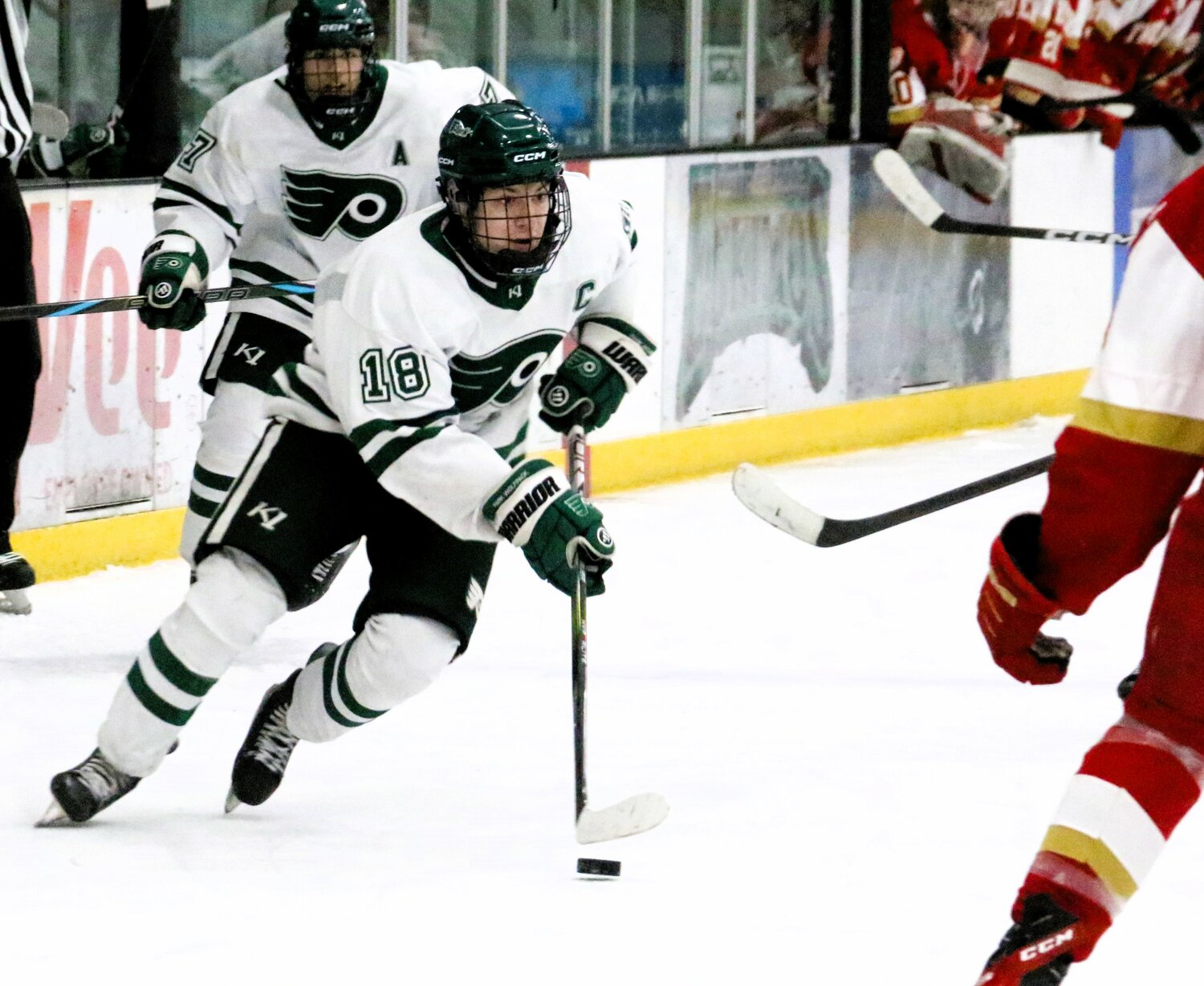
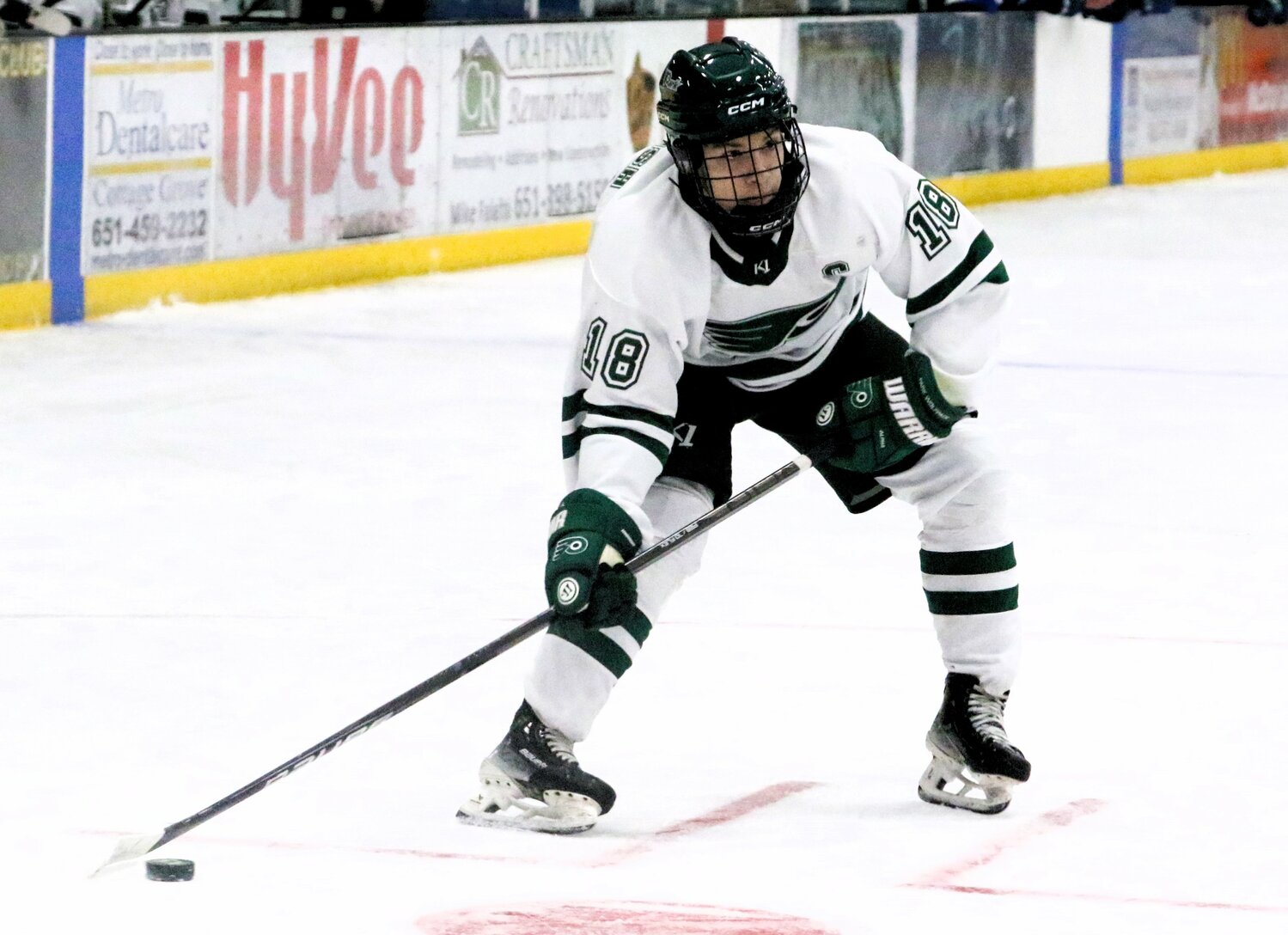
Corkish, the Wolfpack’s leading scorer, assist leader and an all-state selection in boys hockey this season, is mulling where his skates will land next as he enters his final weeks at Park.
For many high school athletic standouts, the next step is logically college sports. That’s not the case for most hockey players. Instead its junior hockey which beckons, which lets players develop both their physical and mental skills before entering the college or professional ranks.
A significant majority of college hockey players have played at least one year of junior hockey after 16U or high school, and many play two or three. Junior hockey helps players mature and transition and the level of play obviously improves, with former high school stars now facing better competition against older, more experienced and stronger players.
USA Hockey's junior program provides opportunities for players ages 16-to-20 to hone and enhance their skills. Currently, USA Hockey oversees three junior leagues, including the United States Hockey League (USHL), North American Hockey League (NAHL) and North American 3 Hockey League (NA3HL). The USHL is the only Tier I junior hockey league in the United States. The NAHL is the only Tier II junior league in the U.S and the NA3HL is the only Tier III junior hockey league.
“Right now we’re looking at different leagues,” said Corkish.
The Austin Bruins in the NAHL is one possibility for Corkish. Green Bay in the USHL and Lethbridge in the WHL might be other options. “I’m just trying to find the right spot for me,” Corkish said.
“We’ll see what happens with the USHL draft in May,” he added, “And then we have the WHL as well, so there’s lots of options. Not totally sure where I’m going to go next year but definitely somewhere junior hockey.”
Corkish played a huge part in Park’s success on the ice this season. He led the Wolfpack in scoring with 27 goals in 26 games and also in assists with 35 on the season. Park went 14-11-1 and finished fifth in the Suburban East Conference.
Asked what Corkish’s legacy as a Park hockey player might be, Park assistant coach Adam Palodichuk said he was reminded of a wheel.
“When you talk about spokes in a wheel, of what someone brings to the table, every single spoke is nothing but positive, both on and off the ice,” said Palodichuk, who is also working on developing a history of the Park hockey program. “In the classroom, the way he conducts himself in public and then the easy piece is the hockey peace.
“A coaches dream where he comes to work every day with a smile on his face, works hard, doesn’t get outworked and wants to continually get better,” Palodichuk added.
It’s a cliché, but Corkish hit the ice before he learned to walk.
“We’ve always had a backyard rink,” Corkish said. “My dad’s always built a backyard rink when we were growing up. So, I think he had me on the ice before I was one. He was dragging me around the ice.”
He started played organized hockey when he was three or four.
His best memory playing Cottage Grove hockey might have been during his Squirt A year where his team went 6-0, beating Moorhead 3-2 for the tournament title. “We were basically state champs that year.”
Owen said he’s had a good experience working with his dad Jeff, the Park boys head hockey coach.
“It’s been fun,” said Owen. “It works perfectly. I think we know each other’s strengths and weaknesses and how we can work well together. We did that throughout my life and with him coaching and it really worked and got me to be the player I am today so I’m very grateful for it.”
Corkish thinks the best part of his game are his consistency, speed, stick handling and his work ethic.
“I try to be a 200-foot player,” Corkish said. “A very hard worker. I try not to get outworked by anybody else. I think that’s one of the things you can control. You can’t control the bounces and how stuff gets layed out during the game, but you can control how hard you work and your attitude.”