Part II: Establishing Historical Existence When tracing out a historical lead on someone, the first and most elementary thing to do, is establish physical and historical existence. This might seem …
This item is available in full to subscribers.
To continue reading, you will need to either log in, using the login form, below, or purchase a new subscription.
If you are a current print subscriber, you can set up a free website account and connect your subscription to it by clicking here.
Otherwise, click here to view your options for subscribing.
Please log in to continue |
Part II: Establishing Historical Existence
When tracing out a historical lead on someone, the first and most elementary thing to do, is establish physical and historical existence.
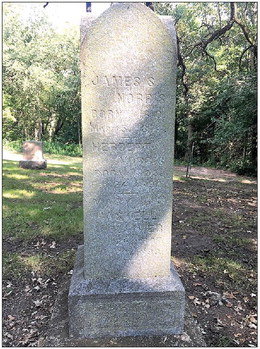
This might seem silly, but it helps if and when naysayers come about doubting the facts. In the case of James Sullivan Norris, we can firmly state: he existed. Not only because a tombstone with four-pointed top stands in Cottage Grove Cemetery with his initials and surname on it, not only because a plaque in that very cemetery points to his help in founding the burial ground, but because a paper in those days—specifically the Stillwater Messenger—recorded it.
The news is on page two of the March 6, 1874, in case one desires to check. Find a Grave is at present incorrect, listing 1875 as Norris’ death date.
That James Sullivan Norris had a few paragraphs on his passing, was a sign of distinction in his day. Not everyone got as much. Nevertheless, those few paragraphs in the Stillwater Messenger of long ago can give us our first touchstone on just who Mr. Norris As to specifics, we learn from the Messenger that he was born in Monmouth, Maine on August 5, 1810 and that “he received a good common school education. This would not have been common on the frontier he was to go to at the time he did, not being set up yet for state government.
As it was, he came to what was then the Territory of Wisconsin, either in 1839 or 1840 the news clipping tells us, and so became “one of the first permanent settlers on land now embraced in this state.”
Wisconsin would be officially formed in 1848, followed by Minnesota 10 years later. Norris was in at the beginning, in this sense.
As to Norris, we learn that he fulfilled the posts of Territorial Legislator, government assessor, supervisor, and town clerk, as well as belonging to Acacia Lodge No. 51 of Free and Accepted Masons. But while frustrating, this short sketch of Norris’ life will have to do for now, as having established physical existence we can move on in weeks to come to greater detail, and a better understanding of the man who gave Cottage Grove its name.

A clipping from page 2 of the March 6, 1874 Stillwater Messenger carrying the news of James Norris’ death. Image accessed at the Minnesota Digital Newspaper Hub.